Transparent heaters: how printed electronics makes transparent surfaces functional
A camera works perfectly until condensation forms on its protective window. A refrigerated display case keeps products at the right temperature, but moisture makes them hard to see. A vehicle’s optical sensors need a clear field of view, even in cold or humid conditions.
In all these cases, the challenge is the same: keeping a transparent surface clear without compromising its visibility or adding bulky components.
Transparent heaters offer a way to address this challenge. By integrating an electric heating function into glass or a transparent film, they can help prevent condensation and frost without losing the surface’s optical function.
At Thinex, we explore how printed electronics can make surfaces more functional by integrating heating elements and other electronic functionalities into components designed to meet the specific requirements of each product.
In 30 Seconds
No condensation or frost
Keeps the surface clear in cold or humid conditions.
Heat where visibility matters
The heating function is integrated directly into the transparent surface.
Thin and lightweight
An alternative to bulky cables, heating elements, and components.
More than one function
Can be combined with other printed electronic elements, such as capacitive buttons.
What are transparent heaters and how do they work?
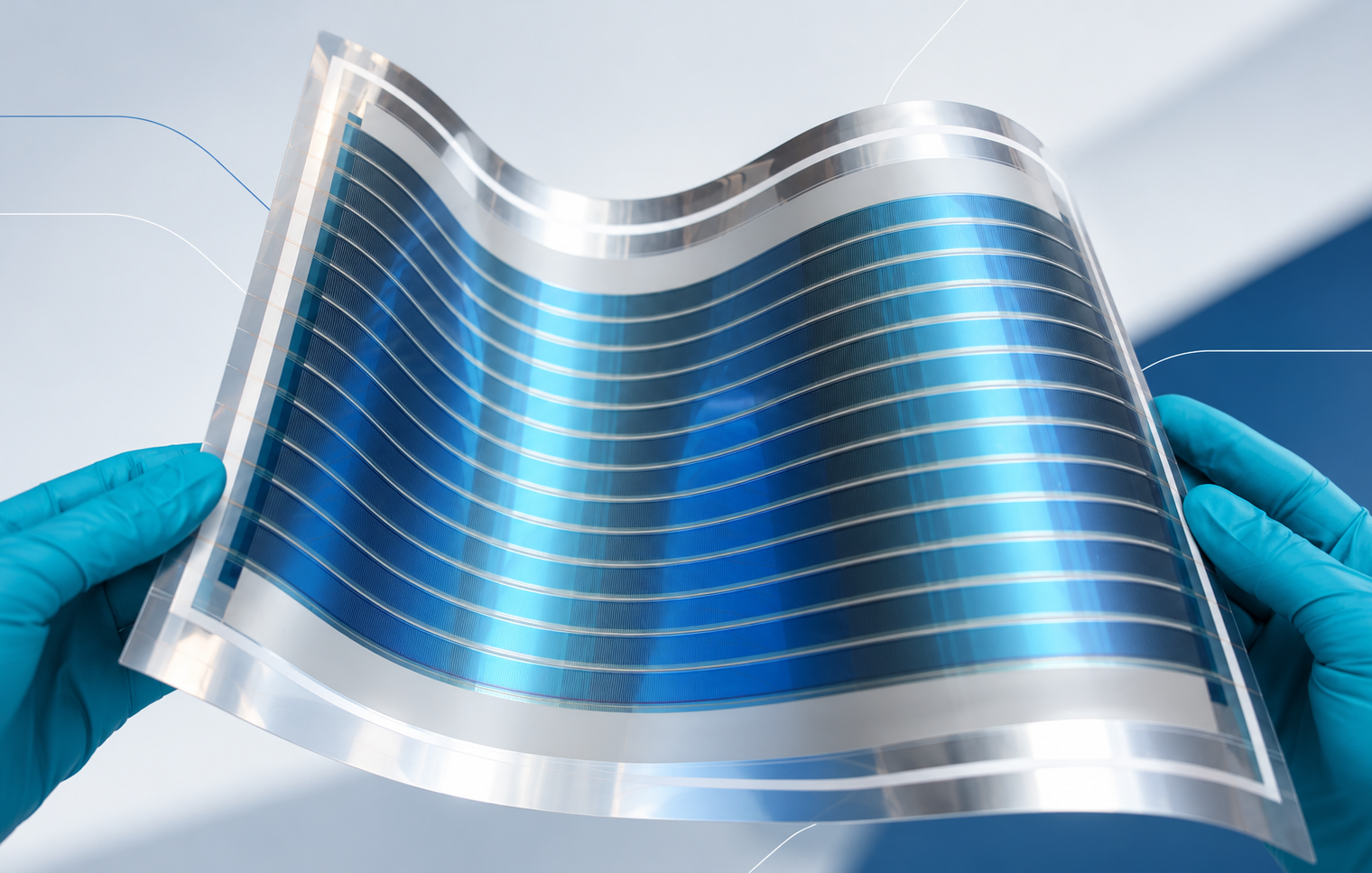
A transparent heater is a surface that generates heat electrically while allowing light to pass through. It typically consists of a thin conductive layer or a very fine conductive pattern integrated into a transparent substrate, such as glass or a polymer film.
When electric current flows through this conductive structure, it generates heat in the selected area. The result is a surface with an additional function: a protective window, a visor, or a display cover that can heat itself.
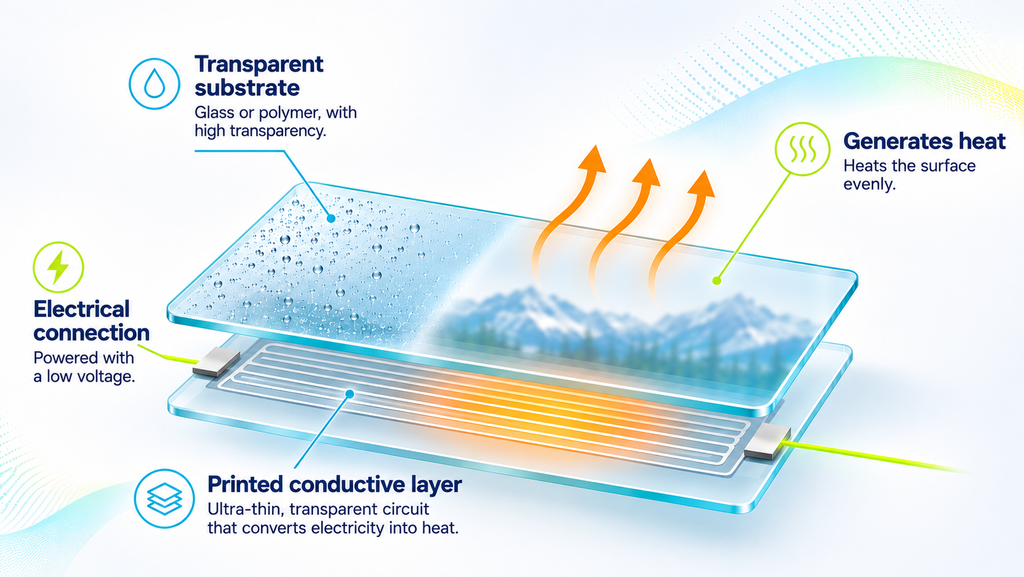
With printed electronics, this conductive layer is integrated directly onto the glass or film, along with its connections and other functional elements. This allows the shape and layout of the heating element to be adapted to each product, creating thin, lightweight, and discreetly integrated solutions.
Transparent does not mean invisible
Transparency does not necessarily mean that the heating structure is completely invisible. Its appearance may vary depending on the conductive materials, pattern, substrate, and manufacturing process. The key is to achieve the optical performance required by the application while providing the necessary heating function.
Why use transparent heaters? From anti-fogging to electric mobility
The main advantage of a transparent heater is that it generates heat exactly where visibility needs to be maintained. Instead of using cables, heating elements, or components positioned behind or around the surface, the heating function is integrated directly into the area that requires it.
This is particularly useful when space, weight, and design flexibility are important. Depending on the materials and configuration, transparent heaters can be adapted to different shapes and sizes, including curved surfaces and transparent polymer films.
Potential applications include:
Potential Applications
| Application | What It Solves | |
|---|---|---|
| Automotive cameras and optical sensors | Help prevent condensation or frost on protective covers, allowing cameras and detection systems to maintain clear visibility. | |
| Electric vehicle components | Integrate heating functions into lightweight, transparent components without adding conventional bulky elements. | |
| Helmet visors and technical eyewear | Help reduce fogging caused by humidity and temperature differences. | |
| Displays and touchscreens | Keep display surfaces clear on outdoor control panels, industrial equipment, and human-machine interfaces. | |
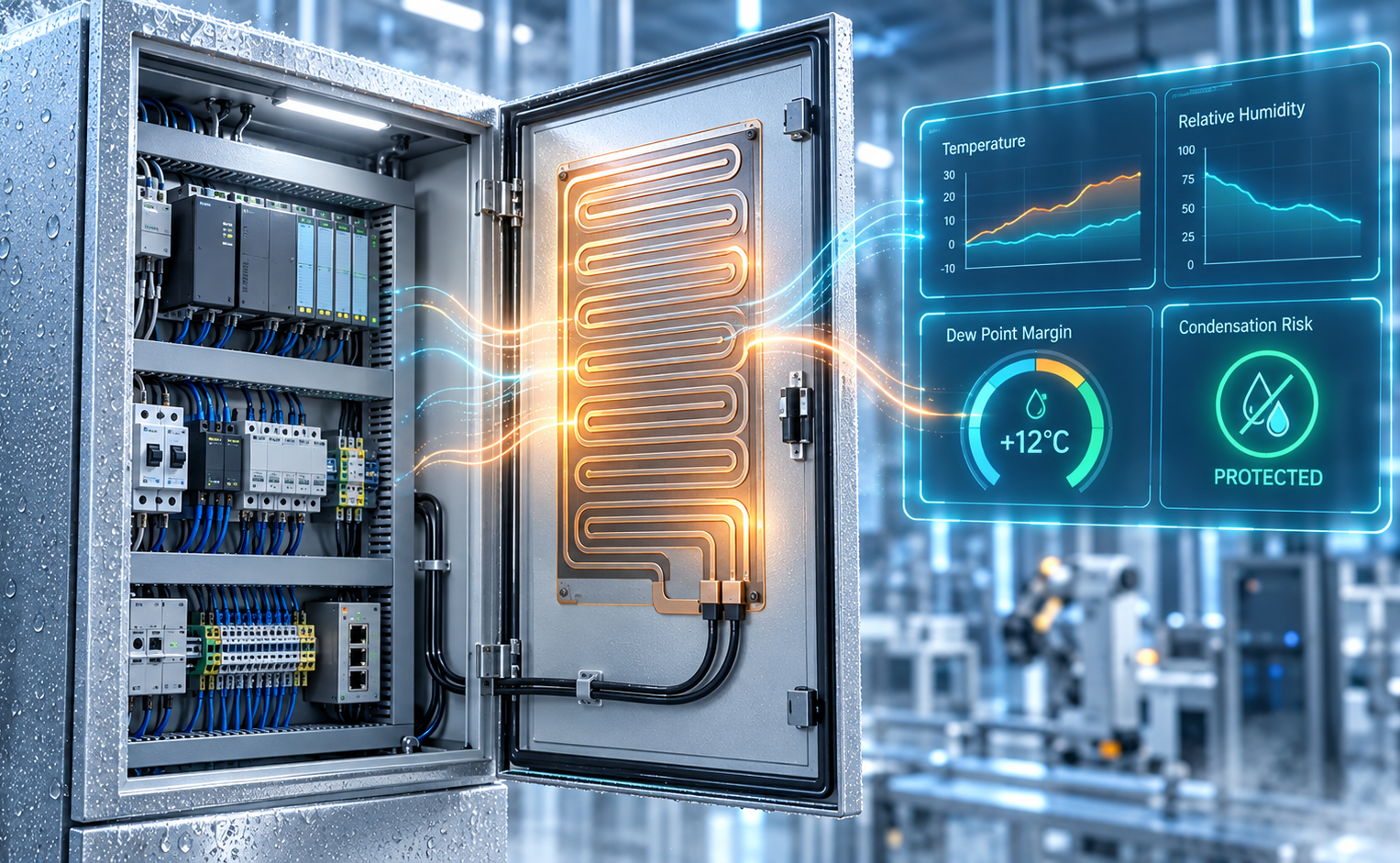
| Refrigerated display cases and equipment windows | Reduce condensation on transparent surfaces exposed to different temperatures and humidity levels. | |
| Outdoor security and inspection systems | Help protect camera windows and optical components from moisture and frost. |
Each application has its own operating conditions, so the design must be adapted accordingly and evaluated as part of the complete product. These are the most important factors to consider:
Factors clau a avaluar per a cada aplicació
Quanta llum ha de passar a través de la superfície, i fins a quin punt pot ser visible el patró conductor?
Quanta calor cal per mantenir la superfície neta en condicions reals de funcionament?
Amb quina rapidesa s’ha d’aclarir la superfície un cop s’activa l’escalfador?
Cal que la calor es distribueixi de manera uniforme per tota l’àrea on s’ha de mantenir la visibilitat?
Quanta energia pot destinar el producte a la calefacció? Això és especialment important en els vehicles elèctrics.
Ha de suportar la humitat, la pluja, el fred o els canvis bruscos de temperatura?
Transparent Heaters for Electric Vehicles: The Polysmart 2026 Project
One of the areas with the greatest potential is electric mobility, where lightweight components, energy efficiency, and functional integration are becoming increasingly important.
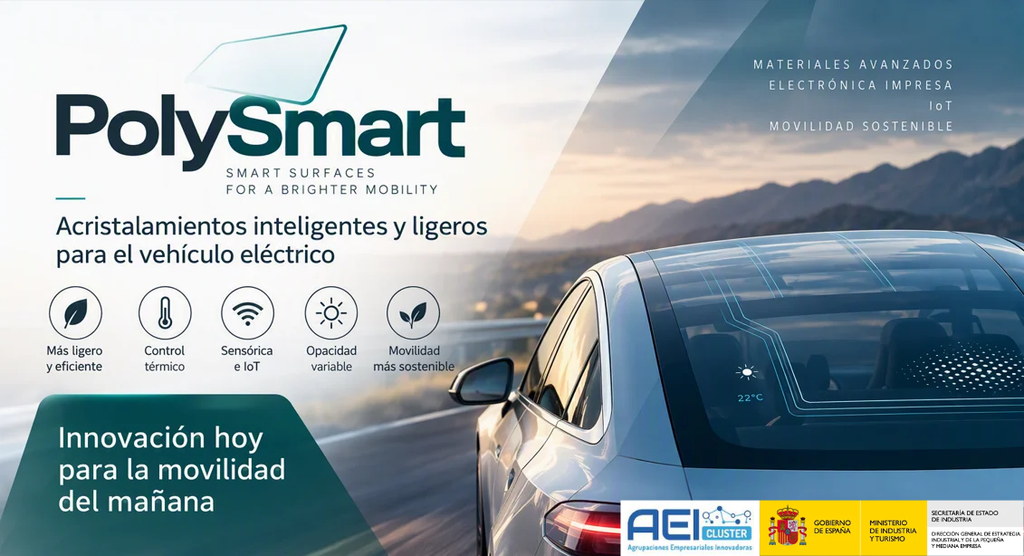
Thinex is participating inAEI Polysmart 2026, a collaborative R&D project alongside Liuxand Inertim Research within the ecosystem of sustainable electric mobility and advanced manufacturing.
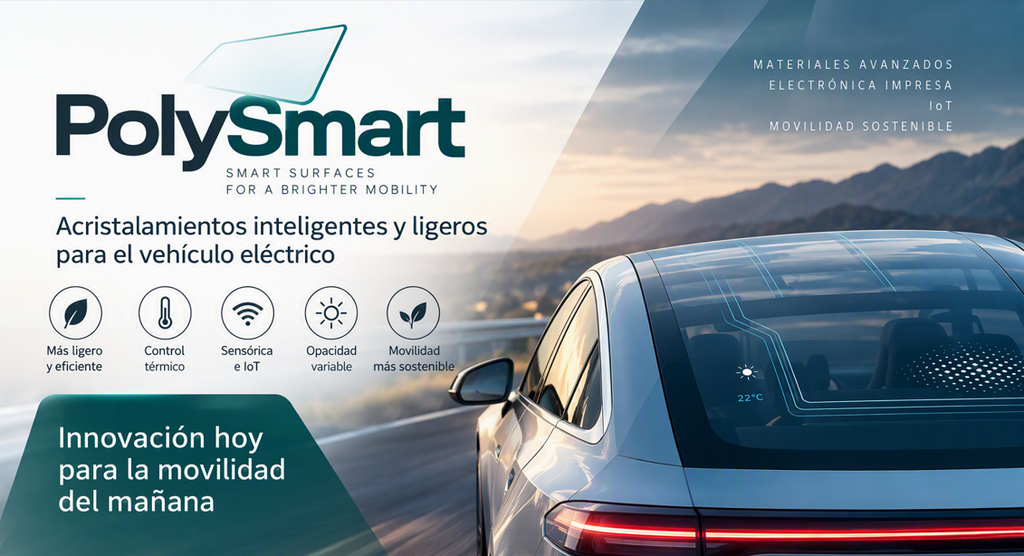
The project shares a common goal: to develop lighter vehicle components that help maximize the range of electric vehicles. This is particularly relevant as the automotive industry explores new materials, manufacturing processes, and functional integration solutions to improve vehicle performance.
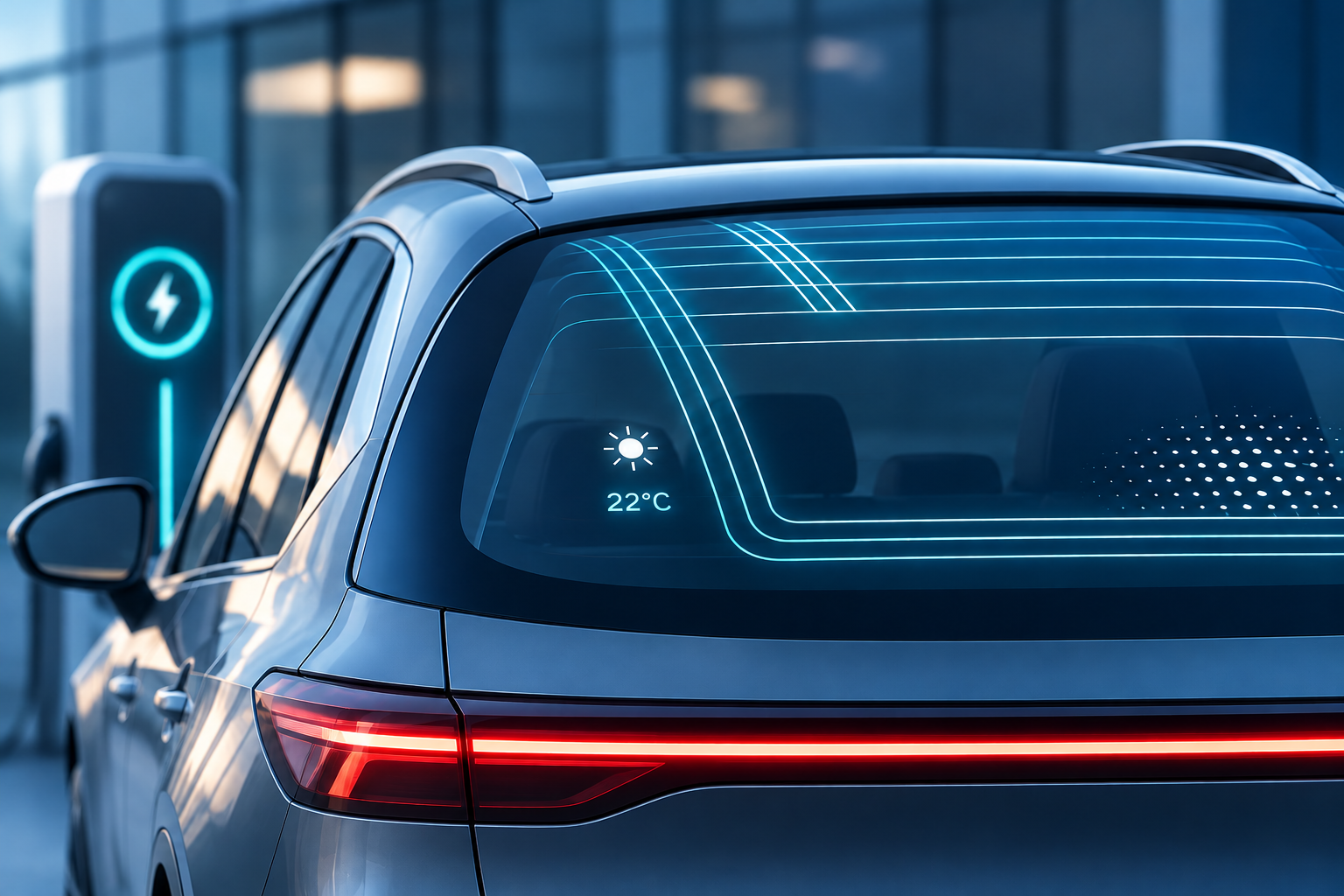
In this context, Thinex is developing a transparent printed heater for an electrochromic sunroof, together with capacitive buttons that will allow users to interact with the roof’s functions. Leitat is also participating in the project, contributing its expertise in the development of electrochromic technologies.
How to Choose the Right Transparent Heating Solution
Transparent heaters are not suitable for every application. Their suitability depends on the specific use case and the balance between optical, thermal, electrical, and mechanical requirements.
A camera cover, an electrochromic vehicle roof, and a protective visor have very different operating conditions. Each requires a specific approach to materials, conductive patterns, power supply, temperature control, and integration.
Conventional heating technologies remain effective in many applications.
When does a transparent heater make sense?
- When the heated area must remain visible
- When available space is limited
- When a discreet, integrated solution improves the product design
At Thinex, we develop printed electronics solutions tailored to specific product challenges, from the design of functional elements to their integration into components and applications.
Because a transparent surface doesn’t have to be passive. It can generate heat, enable interaction, and become an active part of the product.
Want to know if it’s right for your product?
Check out the Flexible Heaters datasheet or tell us about your challenge.
Keep Reading